
Recruiting the Team You Need for 2026 [Systems, Skills, Speed Now]
If you recruit the way you did in 2019, you will lose 2026
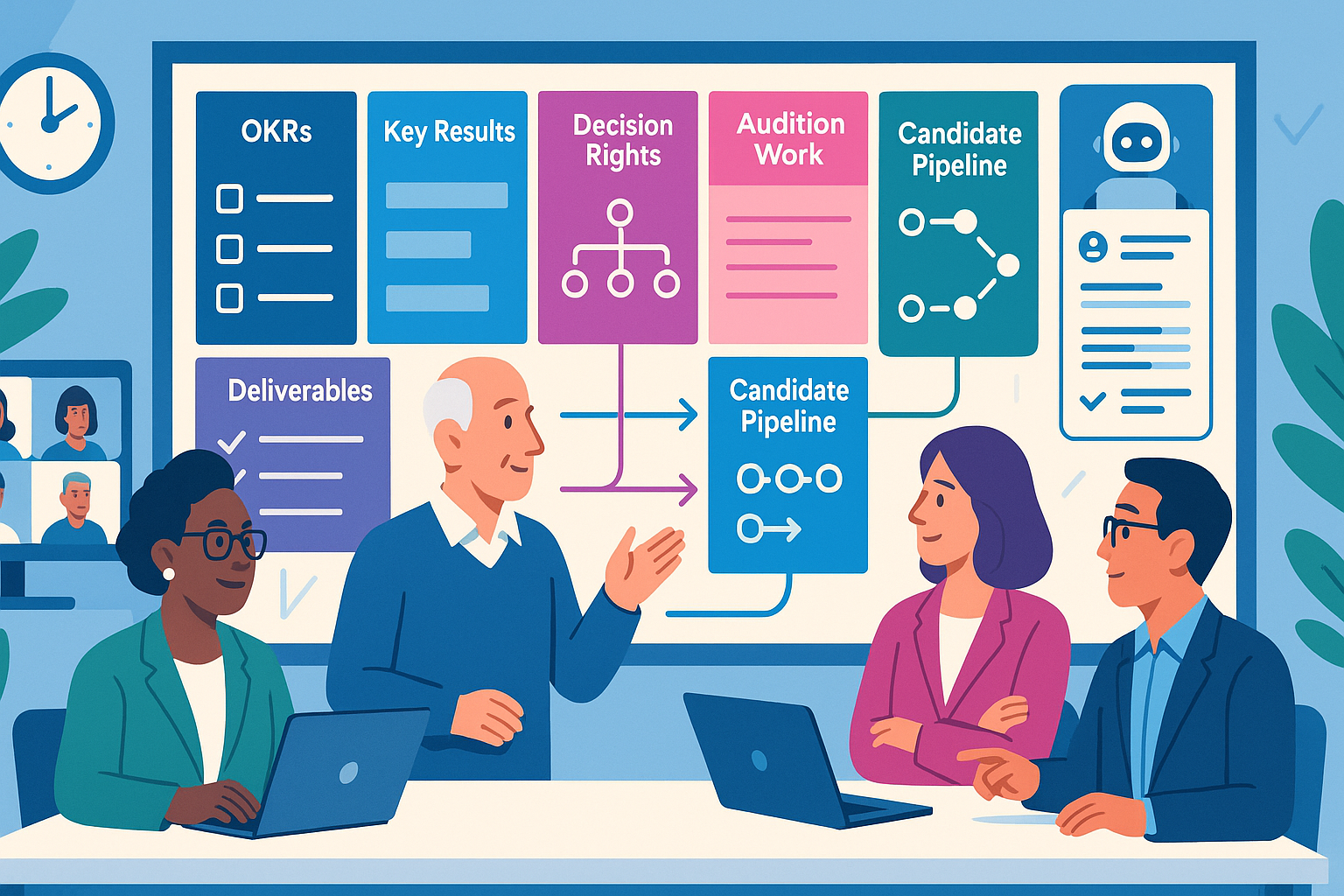
If you recruit the way you did in 2019, you will wake up in 2026 with a payroll full of good people who cannot win the game you are actually playing. The rules have changed. Complexity went up. AI is now a baseline competency. Hybrid is normal. Bureaucracy is creeping in. Your execution is slipping because too few people know what the work is, who decides what, and how progress is measured. You can fix that. But only if you recruit for outcomes, system fit and learning velocity.
This is a no-nonsense playbook for leaders who want a team that can out-execute, out-learn and outlast in 2026.
Why 2026 demands a different hiring logic
The next 24 months will punish leaders who hire for titles over outcomes and process over performance. The organisations that thrive will be built as networks of empowered teams, with clarity on how decisions get made and work flows. That is a Team of Teams architecture, not a command-and-control hierarchy, with leaders acting as gardeners who enable execution rather than chess masters who move pieces around the board. It is how you cope with fast, unpredictable change and compete on adaptability, not bureaucracy.
To deliver that, you need an Organisation Operating System that defines how decisions are made, how work is executed and how objectives are achieved across the business. Recruit into that operating system, not around it.
Brutal truths you must accept before you hire another person
Stop copying large-company org charts. You are not them. Stop writing job adverts that read like wish lists of tools and buzzwords. Stop interviewing for charisma. Stop assuming your managers can scale without support. And stop pretending that better people will overcome weak systems. They will not.
Here are the common failure patterns senior leaders repeat when they recruit for growth:
- Hiring for job history, not outcome capability. You get pedigree, not performance.
- Personalising too early. You pick a person before you design the real work. Structure bends around personalities. Complexity and politics snowball. Use personalise last: activity, grouping, capability, then individual.
- No decision-rights spine. Smart hires stall because nobody knows who decides what. Execution becomes a negotiation.
- Vague accountabilities. People are trusted to deliver without clarity of deliverables. That is assumption, not trust.
- Culture is a poster, not operating rules. Without psychological safety and clear norms, high performers leave and innovation slows.
The 2026 hiring blueprint: seven principles that work
Start with your system, not your shortlist. Then hunt for people who raise the system’s performance.
1) Start with outcomes and operating system clarity
- Define your Organisation Operating System. Specify decision protocols, communication channels, workflows, reporting structure, goal-setting, and performance metrics. This is how work happens, not a slide deck of values. Recruit people who can operate in that system and improve it.
- Align recruitment with the PerformanceNinja 6Ps at the macro level. Purpose and Proposition set direction, People focuses the skills you need, Process and Productivity define how work runs, Potential protects innovation. Hire to strengthen the weakest P.
2) Design roles before people
- Map the work. What must be done to win? Group it for flow. Clarify the capability required. Only then pick the person. Personalise last avoids politics, misfits and rework.
- Run simple design tests. Does the role structure support the strategy, enable accountability and cope with change, without redundant layers that add no value? If not, redesign before you recruit.
3) Build a decision-rights spine
- Publish Leader’s Intent. Be explicit about themes, OKRs and initiatives so teams can act without constant escalation. Use bias towards action and clear ownership.
- Translate strategy into a lightweight OKR system. Avoid cascading by decree. Invite teams to negotiate contribution to top-level outcomes. Review frequently. Do not tie OKRs to performance ratings or you will sandbag.
4) Prioritise learning velocity, EQ and outcomes over tools
- 2026 rewards leaders who can learn fast, make decisions with incomplete data, and keep teams in the learning zone. Emotional intelligence is a performance multiplier. Managers with high EQ significantly outperform revenue targets. Hire for that.
- Score for adaptability and systems thinking. You do not need someone who knows every tool. You need someone who can ship value, improve the system and teach the team how.
5) Engineer team-of-teams interfaces
- Map goals, boundaries and linkages between teams. Hire people who can manage handoffs, navigate interdependencies and operate with shared consciousness, not silo pride.
- Protect psychological safety. People must raise issues quickly and challenge without fear. Without it, your best candidates will sense risk and walk.
6) Treat recruiting as a talent supply chain
- Build a Talent Management framework that covers workforce planning, role design, brand building, recruitment, onboarding, development, performance, retention and succession. Recruiting is a node in a system, not a sporadic event.
- Design span of control thoughtfully. Calibrate management layers to complexity, coordination requirements and planning horizons. Avoid adding managers who do not add value.
7) Assess by doing the work
- Replace generic interviews with work-sample auditions. Define deliverables as nouns, not process verbs. Ask candidates to show the output they would bring to the next sprint. This increases accountability and gives you truth fast.
The critical roles you will regret not hiring in 2026
Stop collecting titles. Start filling system-critical roles that increase speed, clarity and resilience.
- Head of Operating System. Owns decision protocols, meeting rhythms, cross-team linkages and performance dashboards. Keeps the organisation agile, disciplined and focused.
- Product Owner of Outcomes. Translates strategy into backlog value and negotiates contribution across squads. Protects prioritisation. Avoids initiative sprawl.
- AI Ops Lead. Orchestrates AI use across workflows. Standardises tools, data quality and safety. Trains teams to automate without breaking controls.
- Enablement Architect. Builds repeatable templates, checklists and training that remove rework and raise the floor of execution. Think mandate, delegate, automate, template.
- Systems Designer. Designs how work flows across teams and how decisions are made at speed with clarity. Eliminates friction at interfaces and cuts unnecessary bureaucracy.
- Data-to-Decisions Analyst. Turns raw signals into decisions the team can act on weekly. Tracks a small set of lead measures and closes the loop with sprint reviews.
- Culture and Ethics Steward. Codifies norms, supports psychological safety and ensures incentives and celebrations align to strategy, not noise.
How to turn your recruiting into a competitive weapon
Make recruiting part of the operating cadence. The goal is a consistent, high-signal process that moves fast and never lowers the bar.
- Publish crisp role scorecards. Define the mission, 12-month outcomes, authorities, constraints and interfaces. No vague fluff.
- Build your hiring pipeline like a sales pipeline. Source across networks, events and targeted communities. Do not outsource your final judgement.
- Design an interview loop that finds truth, not likeability. Use structured interviews for values and decision-making. Then use work tests to observe how candidates deliver value.
- Use audition projects. A paid micro-engagement on your actual problems is the cleanest signal of fit and speed.
- Reference check with precision. Ask referees to score the candidate against your scorecard outcomes. Probe for operating context and span of control.
- Align compensation to outcomes and norms. Pay for impact. Celebrate learning. Do not reward heroics that ignore the operating system.
- Onboard into your system, not the canteen. Teach the operating system, decision rights, sprint rhythm and escalation paths in week one. That is how you cut time-to-impact.
The 90-day recruiting sprint for 2026
Here is a short and sharp plan to build the team you need at speed.
- Weeks 0 to 2: Clarify the operating system. Define decision protocols, meeting rhythms, deliverable cadence, and accountability. Publish Leader’s Intent and a 2-page system guide.
- Weeks 2 to 4: Redesign roles using personalise last. Test structure against strategy, accountability, flexibility and value-add at each layer. Finalise three critical roles.
- Weeks 4 to 8: Open the pipeline and run the loop. Advertise outcomes, not tasks. Use structured interviews and audition projects that align to your sprint rhythm.
- Weeks 8 to 10: Select and reference. Scorecards decide. Decision rights and interfaces are stated in offers.
- Weeks 10 to 13: Onboard to the operating system. Teach goals, boundaries and linkages. Pair new hires with internal mentors. First sprint ends with a measurable deliverable.
Hybrid, speed and the weekly drumbeat
If you want speed, hire people who operate with a clear weekly rhythm. Short cycles reveal problems early, force trade-offs and keep everyone honest.
- Use quick syncs and 2-week sprints. Review together. Define deliverables, not process. Adjust between sprints, not during them. This is how you maintain flow and avoid chaos.
- Align OKRs with strategy and review them on a cadence. Avoid set-and-forget. Publish progress and learnings. Keep OKRs out of performance ratings to prevent gaming.
- Protect cross-team linkages. Define handoffs, shared resources and joint delivery points. Clarity reduces friction.
Avoid these traps that quietly kill recruiting ROI
Even strong leaders fall into these because they are convenient in the short term.
- Cascading targets by fiat. It kills ownership. Invite negotiated contribution instead.
- Confusing assumption with trust. Trust is explicit. Clarify expectations and deliverables. Then get out of the way.
- Hiring managers who cannot add value. Do not add layers unless the complexity, coordination and planning horizons demand it.
- Mistaking culture for posters. Culture is the daily practice of values, decision rights and operating norms. It is reinforced by systems, rituals and incentives.
- Turning recruiting into an annual event. Talent is a continuous flow. Build a bench. Maintain relationships. Use apprenticeships and coaching to multiply capacity.
How to signal you are a serious home for top talent
A-players have options. Show them you run a real system.
- Publish a clear mission, decision rights and outcomes. People want to know how they will win, not just what they will do.
- Teach managers to create psychological safety while demanding high standards. That is how teams stay in the learning zone.
- Codify your weekly rhythm. Show how decisions are made, how work is prioritised and how progress is tracked. Remove mystery. Add momentum.
- Invest in development. Coaching, mentoring and deliberate practice of core skills keep talent engaged and growing.
Putting it all together: recruit for systems, not slogans
If you want a team that can execute in 2026, you must recruit for the organisation you are building, not the one you used to have. That means designing roles around real work, installing a clear operating system, and hiring people who raise the speed and quality of decisions. It means you value learning velocity and EQ alongside expertise. It means your weekly rhythm drives outcomes, not activity. And it means you treat recruiting as a continuous, system-wide capability, not a periodic panic.
Leaders who accept these truths and act on them will stop firefighting. They will cut bureaucracy, reduce mis-hiring, and build teams that deliver results, week after week. The rest will spend 2026 asking why their talented people cannot seem to get the right things done in the right way at the right time.
Recruit the team your future deserves. Then let your operating system do its job.
Next Steps
Want to learn more? Check out these articles:
Decision Rights for Fast Growth: A Tactical Leader Playbook
Convert Tasks to Deliverables: The Tactical Leader Playbook
Tame Meeting Overload, Protect Focus: Rules, Rituals, Metrics
To find out how PerformanceNinja could help you, book a free strategy call or take a look at our Performance Intelligence Leadership Development Programme.