
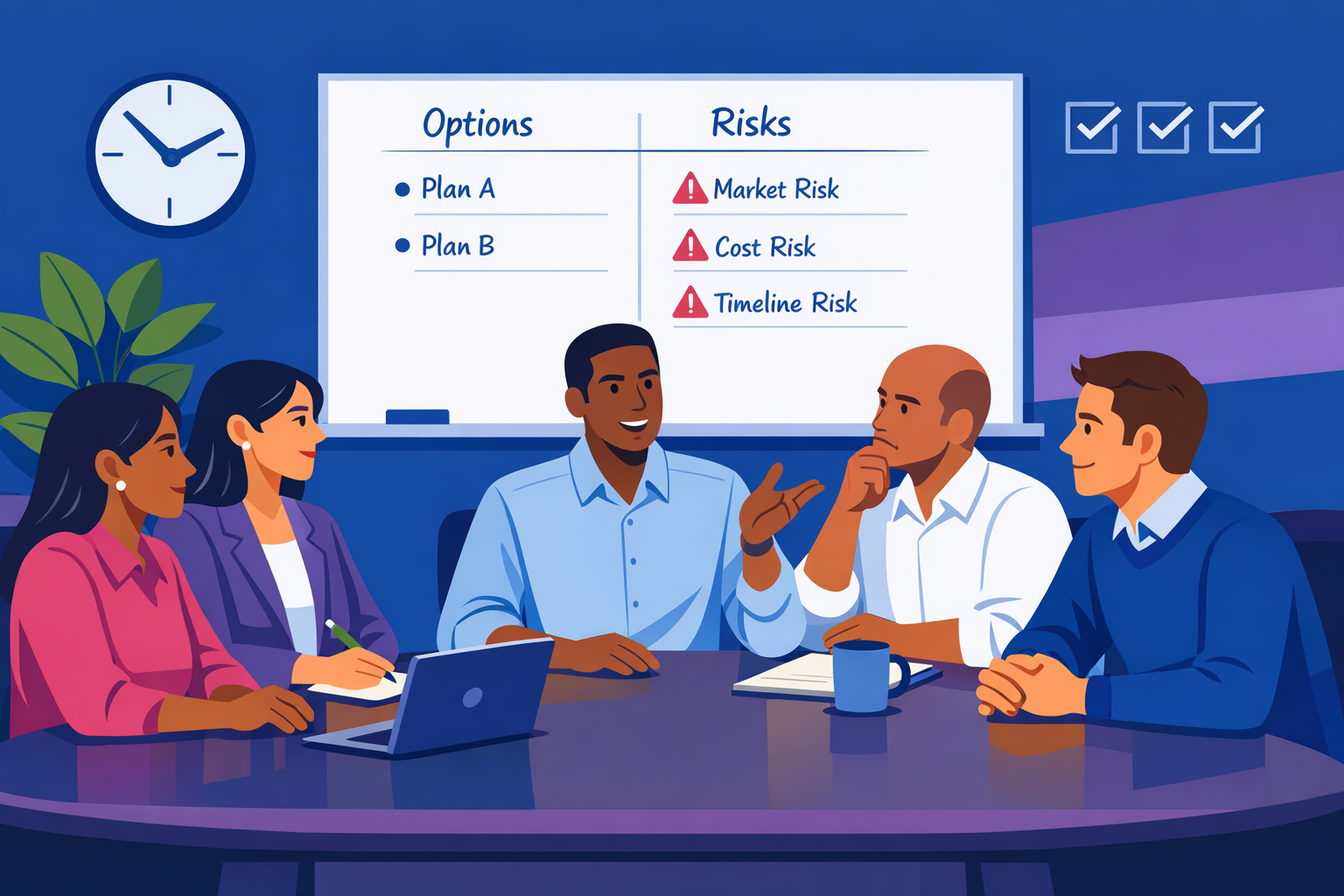
Psychological Safety in Leadership Teams: The Unspoken KPI
Most leadership teams say they want the truth.
What they actually want is agreement.
So the meeting happens. Everyone nods. The slide deck advances. The “risks” are politely phrased. The real issues stay locked behind carefully managed language.
Then the project fails, the strategy drifts, the culture rots, and the CEO asks the classic question.
“Why didn’t anyone tell me?”
They did not tell you because your leadership team is not psychologically safe.
Psychological safety is not a “nice to have”. It is not a wellbeing initiative. It is a core operating condition for high performance leadership teams. Without it, you cannot get accurate information, you cannot make high quality decisions, and you cannot execute reliably.
This article lays out the harsh truth, the signs you are already living with it, and a practical way to rebuild psychological safety without turning your exec meetings into group therapy.
What psychological safety is (and what it is not)
Psychological safety is the shared belief that it is safe to speak up with ideas, concerns, questions, and dissent, without being punished or humiliated.
It is not:
Being “nice”. Niceness can be a mask for avoidance. Safety enables robust disagreement.
Consensus. Safety increases the quality of debate, not the amount of agreement.
Lower standards. Safe teams can hold higher standards because issues surface early.
Comfort. The best leadership conversations are often uncomfortable. Safety means people can enter that discomfort without fear of retaliation.
Google’s Project Aristotle popularised the finding that psychological safety is a key driver of team effectiveness. Amy Edmondson’s work has consistently shown the same pattern: when people fear interpersonal consequences, they withhold information. That is not a character flaw. It is a predictable response to risk.
Leadership teams are especially vulnerable because the stakes are high and the egos are often higher.
Why leadership teams lose psychological safety
Psychological safety rarely dies in one dramatic moment. It dies through a thousand small lessons that teach people what is “safe” to say.
Here are the most common killers in leadership teams.
1) Status games and unspoken hierarchy
You can have an org chart with flat reporting lines and still run a courtroom.
In many exec rooms, one or two voices carry the real authority. Others learn quickly that pushing back will cost them influence, opportunities, or trust. So they stop.
2) The “high performer” who is allowed to be toxic
When a leader is brilliant but abrasive, and they are not confronted, the team receives a clear message.
Performance matters. Behaviour does not.
Once that message is sent, safety collapses. People start managing personalities instead of solving problems.
3) Punishment disguised as “robust debate”
Some leaders claim they want challenge. What they want is a sparring partner they can beat in public.
There is a difference between:
Debate: attacking the idea, with respect for the person.
Dominance: attacking the person, with a thin veneer of logic.
Your team knows which one is happening.
4) Meetings that reward speed over accuracy
If your exec meetings are rushed, overloaded, and constantly running late, you are training people to compress complexity into soundbites.
Soundbites are safe. Nuance is risky.
You will get confident answers, not accurate ones.
5) Misaligned incentives between functions
If each executive is measured on their silo outcomes, the leadership team becomes a negotiating table, not a decision-making unit.
People withhold information because sharing it weakens their bargaining position.
This is where the PerformanceNinja 6Ps lens helps at the big-picture level. Psychological safety is not just a “People” issue. It is shaped by:
Purpose: Do we have a clear shared why and a few non-negotiable priorities?
Process: Do we have meeting and decision systems that force clarity and accountability?
Productivity: Do we track commitments and outcomes, or do we rely on memory and good intentions?
If these are weak, safety becomes fragile because politics fills the void.
The cost of low psychological safety (it is already on your P&L)
Low psychological safety does not show up as a line item called “fear”. It shows up as expensive patterns that leaders misdiagnose.
Common symptoms include:
Slow execution because risks are discovered late, not early.
False alignment where everyone agrees in the room and disagrees in the corridor.
Decision churn because decisions are made without real dissent, then revisited after problems emerge.
Weak accountability because people avoid hard conversations and call it “being pragmatic”.
Talent loss because strong people will not stay where honesty is punished.
Innovation theatre where ideas are requested, then subtly shot down through status and cynicism.
And the worst part is this: low safety creates a leadership team that cannot self-correct.
Because the mechanism for correction is truth, and truth is what you have trained people not to deliver.
How to spot low safety in your leadership team
Forget the engagement survey for a moment. You can diagnose psychological safety by watching behaviour in real meetings.
Look for these indicators.
People speak carefully, not clearly
They use hedging language:
“Just a thought…”
“I might be wrong, but…”
“This is probably not important…”
Sometimes politeness is simply fear in professional clothing.
Silence after the most senior person speaks
When the CEO, MD, or founder states an opinion early, discussion collapses into execution planning. That is not alignment. That is compliance.
Real debate happens after the meeting
If the best thinking happens in side chats, your meeting is not a decision forum. It is a broadcast.
Bad news arrives late and pre-packaged
When problems are only raised with a complete “solution”, people are protecting themselves. They believe raw issues will be punished.
Meetings feel “efficient” but outcomes are poor
Low-safety meetings can look tidy. They are short on conflict. They produce quick decisions.
Then reality hits.
The leader’s dilemma: safety without softness
Senior leaders often resist psychological safety because they associate it with fragility.
They are right to resist fragility.
But they are wrong to confuse fragility with safety.
A psychologically safe leadership team is not one where people feel good. It is one where people tell the truth early, challenge assumptions fast, and commit to decisions hard.
Think of it as building a room that can handle heat.
No heat means no progress. Too much heat without safety means people shut down or retaliate. The goal is high heat with high trust.
How to build psychological safety in leadership teams (practical, not fluffy)
You do not build psychological safety by announcing it. You build it through repeated experiences that prove speaking up is worth the risk.
Here are the moves that work in real leadership environments.
1) Set the standard in the first five minutes
The opening of the meeting sets the social contract. If you start with performance updates and judgement, people will play defence.
Instead, start with a short framing that creates permission for truth. For example:
“We are here to improve the quality of the decision, not defend our functions.”
“If you disagree, I want it in the room, not afterwards.”
“If we find a problem, we own it together.”
Then you must act consistently with what you said. The team will judge you by behaviour, not slogans.
2) Change the order of speaking (stop the HIPPO effect)
The Highest Paid Person’s Opinion ends discussion. If you speak early, you anchor the room.
Run your exec discussions like this:
Clarify the question in one sentence.
Ask for dissent first: “What are we missing? Why might this fail?”
Round-robin input from each exec, starting with the most junior or newest.
Then the CEO or chair offers a view, last.
This is a simple structural hack. It works because safety is partly social, and partly procedural.
3) Make disagreement a job requirement
If challenge is optional, it will not happen.
Assign roles in major decisions:
Red Team: actively stress-tests the plan.
Risk Owner: names the top 3 risks and how you will detect them early.
Assumption Buster: identifies the assumptions you are treating as facts.
This removes ego from dissent. People are not “being difficult”. They are doing their job.
4) Practise “clean” responses to bad news
Bad news is the ultimate test. Your first reaction sets the future reporting culture.
When someone brings a problem, respond in this order:
Thank them for raising it early.
Clarify facts: what happened, what is impacted, what is unknown.
Separate learning from accountability: you can hold standards without public shaming.
Agree next actions, owners, and timing.
If you jump straight to blame, you will get silence next time. Guaranteed.
5) Replace “drive-by criticism” with specific challenge
Low safety often hides behind vague negativity.
Examples:
“I’m not sure this will work.”
“We tried that before.”
“I have concerns.”
These statements kill momentum and provide no value.
Install a rule: criticism must be coupled with a specific concern and a test.
For example:
“I think it might fail because our sales cycle is longer than the plan assumes. Let’s test it against the last 10 deals.”
This increases rigour and reduces personal conflict.
6) Create a visible commitment tracking system
Psychological safety does not survive in a leadership team where commitments evaporate.
When tasks assigned are not followed up, people stop trusting the room. They stop raising issues because nothing changes anyway.
At minimum, you need:
A single list of exec-level commitments
An owner for each commitment
A due date
A clear definition of done
A weekly review
This is not administration. It is credibility.
7) Address the “elephants” fast, privately, and directly
If one executive intimidates others, you cannot workshop that in a group session and hope it resolves itself.
It requires a direct conversation with clear behavioural expectations and consequences.
Use language like:
“When you interrupt and dismiss points, people stop contributing. That reduces decision quality. It must change.”
“In leadership meetings, we challenge ideas without attacking people. If it happens again, I will stop the meeting and address it.”
Psychological safety is protected by enforcement, not intention.
A high-level implementation plan (30 days to shift the room)
You can improve psychological safety quickly if you treat it as an operating system change, not a culture slogan.
Week 1: Diagnose with observable data
Pick two leadership meetings to observe closely
Track who speaks, who interrupts, who challenges, and what is avoided
Run a short anonymous pulse with 5 questions focused on speaking up and consequences
Week 2: Install meeting mechanics that force honesty
CEO speaks last on decisions
Round-robin dissent first
Assign Red Team roles for the top 2 decisions that month
Week 3: Fix the follow-through
Create one commitment tracker for exec actions
Review it weekly, ruthlessly
Remove or renegotiate commitments that are unrealistic
Week 4: Address the interpersonal blockers
Directly coach or confront the behaviours that shut people down
Agree explicit team norms and consequences
Re-run the pulse survey and compare results
The goal is not perfection in 30 days. The goal is a visible shift in what is safe to say.
The leadership team is the culture engine, whether you like it or not
Your organisation takes its cues from the leadership team.
If your executives posture, avoid, and manage impressions, everyone else will too.
If your executives challenge hard, tell the truth early, and commit cleanly, that behaviour will cascade.
This is why psychological safety in leadership teams is a strategic advantage. Not because it feels good. Because it produces better decisions, faster execution, and fewer unpleasant surprises.
If you want a brutally simple test, ask your team this and insist on a real answer.
“What is the one thing you think, but do not say, in this room?”
The quality of what you hear next will tell you exactly where you are.
Next Steps
Want to learn more? Check out these articles:
Manage Underperformance Without Losing Your Best People
How to Retain Top Talent in a Growing Organisation
Async Leadership: Building Aligned Distributed Teams Without More Meetings
To find out how PerformanceNinja could help you, book a free strategy call or take a look at our Performance Intelligence Leadership Development Programme.